Before a picture was taken down a staircase or a stranger was allowed through the front door, the Maison Ozenfant had to make room for both events. The house that Le Corbusier and Pierre Jeanneret designed for the painter Amédée Ozenfant in the 1920s included a room for showing art on the same floor as the bedroom and dining room. There was space to store works of art there too. The studio occupied the floor above. In that arrangement a painting could pass, over a very short distance, from something its maker was still working on to something another person had been brought into the house to see. It might make the journey downstairs and back again several times. The drawing of the house allows us to separate those activities, although in practice they would have drawn on the same hours, passages and people.
That small distance matters. From the standpoint of a visitor, a painting is ordinarily encountered at a point when someone has already settled where it belongs. In a studio the positions of things are more provisional. A painting standing against a wall may be there because it is drying, because it has been set aside, or because the light falls well on it at a particular hour. Once it goes into the exhibition room, the same position can acquire the authority of a decision. The house makes that change possible while keeping the places where it happens close together. It is unusually candid about the amount of space that has to be assigned to looking if an artist is going to receive people at home.
The building’s most conspicuous feature, the glazing of the studio, grew out of restrictions specific to its site. The plot near Parc Montsouris was narrow, and the conditions of building on it limited where openings could go. A reinforced-concrete frame accommodated large windows. Rooflights akin to those used in industrial buildings brought additional daylight into the studio. The Fondation Le Corbusier’s account also notes a mezzanine library and, at ground level, a garage and a housekeeper’s flat. From the street we can see a striking arrangement of glass. In section we can see how much had to be fitted around the illuminated room before it could occupy the place that it did.
Calling the studio an instrument for painting is accurate as far as it goes. An instrument has to be kept available for use. Someone has to decide when a caller can come upstairs, what can be left out overnight and which activities must take place elsewhere. The building assigns space to several such tasks while giving the painter the room with the strongest claim on the light. The distinction becomes harder to register when the house is photographed as a composition. A single view can preserve the formal order of the architecture while making the division of labour that sustains it almost impossible to see.
Ozenfant and Le Corbusier had already worked together on Purism, and a house for one of the collaborators inevitably invites a reading in the light of their shared work. There is a temptation to treat each part of the building as if it illustrated a proposition made elsewhere. The window becomes a statement about transparency. The studio stands for the disciplined production of form. Yet the house also belongs to an individual who needed to keep paintings, receive people, eat and sleep. Some of these requirements can be generalised across many households. Others have to do with a particular trade and the resources a particular person can devote to it. The modernist problem becomes interesting where those requirements fail to coincide. You can repeat the dimensions of a window more easily than you can repeat the conditions that give someone uninterrupted time to work beside it.
The original rooflights have since given way to a terrace, and changes to windows and interior volumes accommodated family life. These alterations complicate any claim that a visitor today can simply recover the house at the moment of its design. Visitors arrive with different documents in mind. An archival photograph supplies an earlier outline for the roof. A plan clarifies where one could once enter. A familiar view of the façade lets somebody recognise the house before they have made sense of the street around it. The physical building offers evidence of certain decisions. The visitor’s knowledge brings back others. On occasion, what appears to be an immediate experience of the architecture involves considerable effort in reconstructing a room that has ceased to exist in that form.
When Fitzpatrick Gallery presented Dépasser at the Maison Ozenfant in spring 2025, the house had acquired that second existence through documents and through the circulation of its name. To know the name was already to have a reason to look at the windows, to ask what had been altered, perhaps to stand in the one place from which a familiar photograph could have been taken. The works of Beatrice Wood and Irène Zurkinden entered rooms where a visitor might already have a fairly detailed idea of what would count as worth noticing. A temporary exhibition can redirect that expectation, although it has to reckon with how much of the visit the architecture has organised before the gallery opens its doors.
The original exhibition room was conceived for a painter who lived in the house and could act on the interval between making a work and showing it. In 2025 a gallery could occupy the building briefly and arrange an encounter between artists whose careers had taken them through several cities and kinds of work. Both uses bring art into the domestic interior. They give different people power over the threshold. The painter could decide when to bring a work down from the studio. The gallery could decide which works to bring into the house and under whose name the public would first encounter them. What changes hands, along with the keys, is a portion of the authority to say where a work belongs.
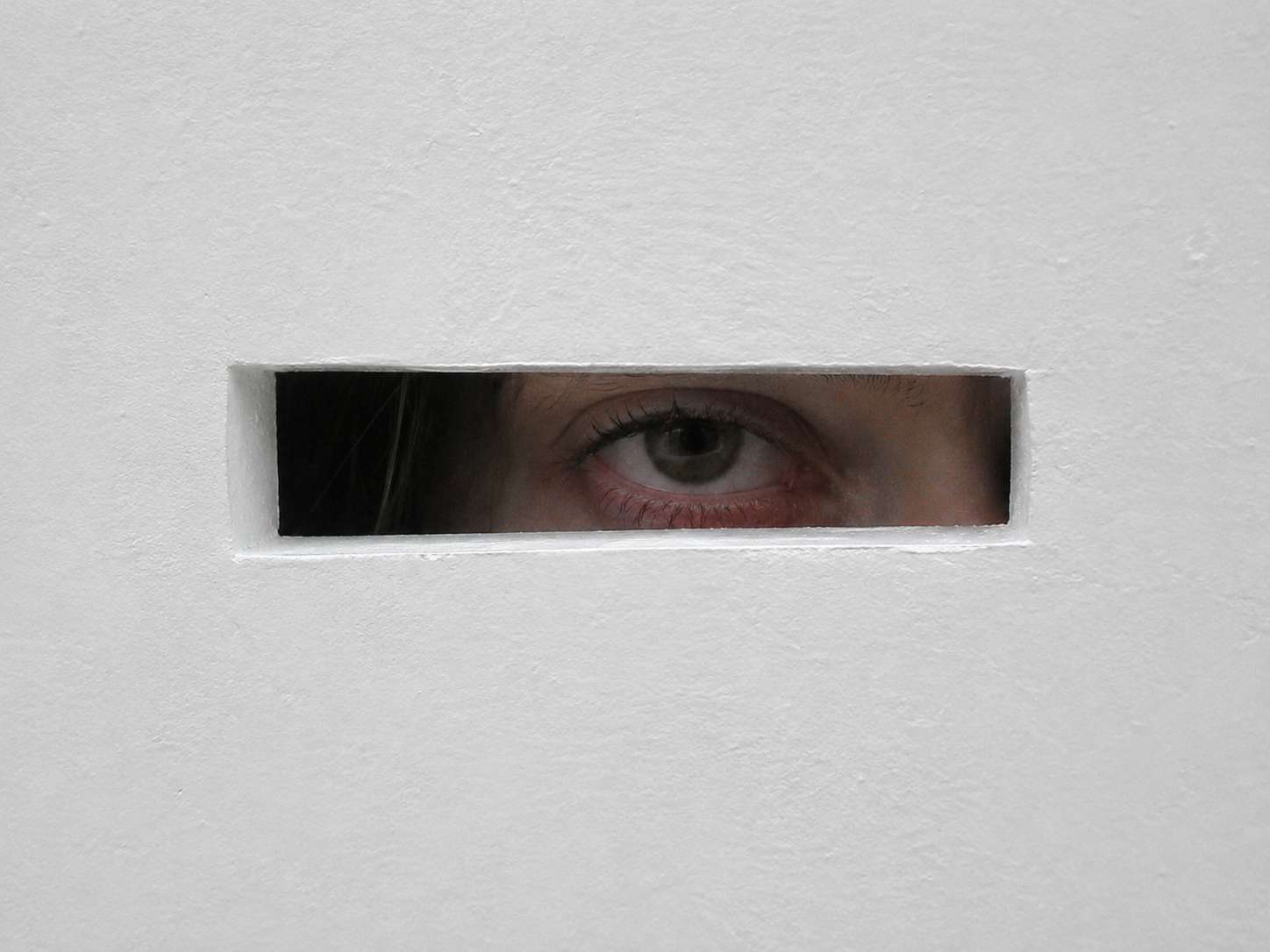
A drawing by Beatrice Wood offers a way into that question from the other side of a door. The Man Who Forgot to Knock, made in 1977 in graphite, watercolour and coloured pencil, names a mistake so ordinary that it seldom enters an account of architecture. The man knows where the door is and how to use it. What he forgets is that the person on the other side is meant to have a say in when it opens. Forgetting can indicate familiarity, distraction or a sense of entitlement. The title leaves those possibilities available. In the Maison Ozenfant, a house designed to bring particular visitors into contact with art, the drawing introduces a question about a room that its dimensions cannot answer. Who can interrupt whom?
Architecture can give the person behind the door some protection. A room with a door of its own can make a difference to whether someone can finish a drawing before they have to attend to something else. It takes more than a plan to secure that interval. What goes on in the house may oblige one person to be constantly available while another has some claim on solitude. The arrangement will vary with money, the kinds of work people do and who is expected to care for whom. A good room changes those conditions in certain respects. It cannot decide how they will be shared. Wood’s drawing leaves attention at the threshold long enough for the distinction to become quite practical.
Zurkinden’s Avenue du Maine / sous la pluie, dated 1930–31 and painted in oil on a canvas forty-six centimetres high, establishes another relation between distance and access. An avenue is large enough to enter from several streets and to be crossed by people with different business there. The name on the work locates it quite narrowly. The rain makes that location specific in time. A street that a person can visit on another day is here available under conditions that have already passed. A viewer can take in the dimensions of the whole picture and still have to come close to see how much of that passing condition the paint carries.
The architectural window offers a view at the scale of the room. It can make the street legible as a stretch of space framed by the building. The painting puts a street into the visitor’s field of vision by quite different means. It introduces an hour, a kind of weather and the distance the painter was prepared to keep from what she saw. A person looking at the canvas may have to turn away from the glazing and let their eyes adjust to the surface immediately in front of them. That small readjustment is one of the things a site-specific exhibition can arrange. The house remains present, including as a source of light, while a work gives someone a reason to stand in a place they would otherwise have walked past.
A famous building has the capacity to receive almost anything as evidence about itself. A small painting hung near a window can be remembered for the way it complemented the room. It can also cause a visitor to notice that the light coming through that window makes the painting hard to see. One of those accounts preserves the architectural view. The other records a visitor moving to recover the work. The difference can be a matter of half a step. It is also a difference in what the exhibition will be remembered as having made available.
The gallery placed Wood and Zurkinden in relation to Paris at different moments in their lives. The pairing gives a reader of modernism something other than the succession of movements usually associated with the city. It brings into view the possibility of spending formative time there and still making much of one’s work elsewhere and under changing conditions. Wood’s passage through drawing and ceramics, and Zurkinden’s work across painting and theatre, also make it harder to identify either artist with the kind of output a single room was built to support. A house made for one painter supplies a remarkably precise answer to the question of where his work would happen. The exhibition puts that answer beside two practices for which Paris supplies a part of the account and leaves much of it open.
The proximity of their work to a canonical building can make these questions easier to ask. It comes with a cost. The adjective modernist may act as a credential conferred by the address. A visitor who has come primarily for the architecture might hear that the exhibition restores something to the history of the house and understand the works accordingly. There is a gratification in finding that a celebrated interior can now admit people whose practices had a quite different place in that history. It is worth following the feeling past the pleasure of admission. The building still lends its name to the encounter. The artists’ work has to make a claim on the visitor’s time amid the much older invitations that name already carries.
One way the exhibition exceeds those invitations is through the uneven fit of its parts. The Wood drawing dates from decades after the house was built. The Zurkinden painting is close enough in date to be read in relation to the city in which the house was designed, while its particular street and weather take us away from the address of the exhibition. A useful juxtaposition can leave those differences in place. The drawing’s question about a caller and the painting’s attention to the weather give a viewer two reasons to keep looking after the house has made its first impression. Each changes the scale at which the visitor is likely to register a room, a threshold or a view. Someone who came to take in the whole interior may leave remembering how far they had to move towards one small object.
A display has to allow for that possibility. It may mean accepting that the best view of a work is a poor place from which to photograph the room. It may mean letting a label address a painting’s particular facts before offering a theory of why it was brought there. The exhibition’s argument becomes more persuasive when a visitor has a chance to disagree with it on the evidence of the works. In a house whose windows can command a room before anything is hung, that chance depends on how long the visitor is allowed to hesitate.
There is an economic reason for a gallery to work with a room that people already want to enter. A permanent venue has to give visitors reasons to return to the same address. An itinerant programme can make the address part of each occasion. Fitzpatrick framed Dépasser as the start of a series of exhibitions in particular sites. The prospect of seeing the Maison Ozenfant from inside can bring somebody to a show who would have passed by the same artists on a regular gallery day. An unusual conjunction of works and rooms might then become possible. The short duration that makes the visit feel like an opportunity also compresses the time available for a second look. The more the occasion depends on the chance to enter, the harder it can be to tell what would bring that visitor back.
The use of a house puts a limit on what can plausibly be repeated. One can hang these works together again. Repeating the exhibition would require negotiating the arrangement of doors and rooms once more, along with the people who come because they recognise the building. There is a difference here between an exhibition that takes advantage of its surroundings and one that develops an argument by working on them. An address can supply association with very little effort. The argument takes shape when changing the building would oblige the gallery to change something about how the works meet or about what the viewer is asked to do. A location has become consequential once the same set of labels and the same sequence of works would feel insufficient elsewhere.
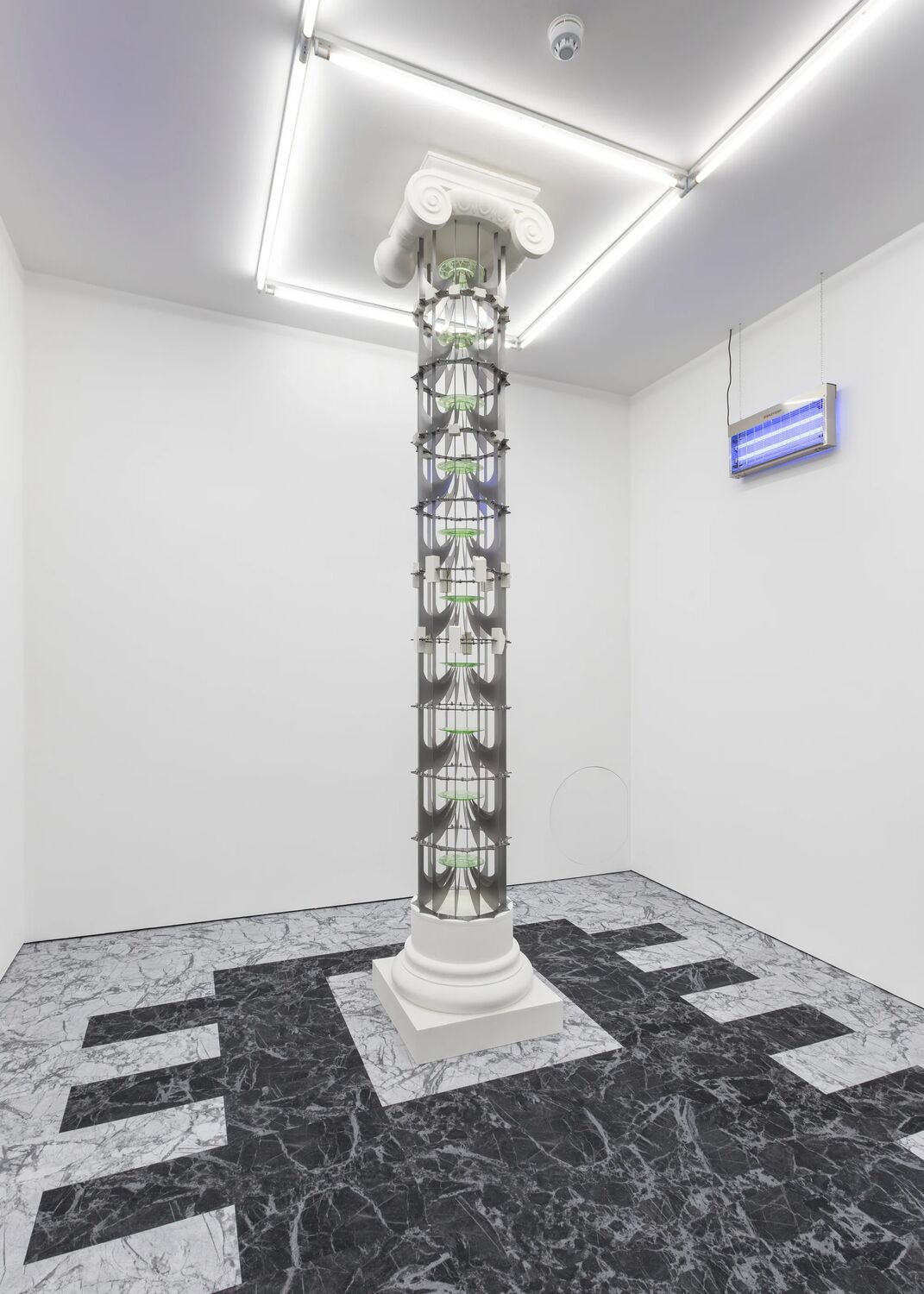
That requirement has implications for photography. A view taken to show how the house accommodated the exhibition will answer a different question from a reproduction that lets a reader examine a drawing closely. One image might need the corner of a room, a run of wall or enough floor to describe where someone could have stood. The other needs to let the marks occupy nearly all of the available surface. It is easy to place these photographs beside each other online and assume that the view of the room will supply whatever the reproduction lacks. The reader still has to imagine what it took to pass from one kind of attention to the other. A photograph has difficulty showing the moment during a visit when an attractive room stops being the most interesting thing in it.
The difficulty grows when the architecture is already recognisable from a particular angle. To photograph from there is to give the reader something they can place straight away. Recognition lets the new image join a series of earlier views, an advantage for anyone trying to put an exhibition into circulation. It can also mean that the image is selected because it confirms an impression that existed before the show. A minor adjustment to a room, or a deliberate decision to let a small object face away from the best light, may have mattered more to the visit and still produce a less persuasive photograph. This is a practical editorial decision. Which picture goes first determines what a reader is likely to treat as evidence when they reach the second.
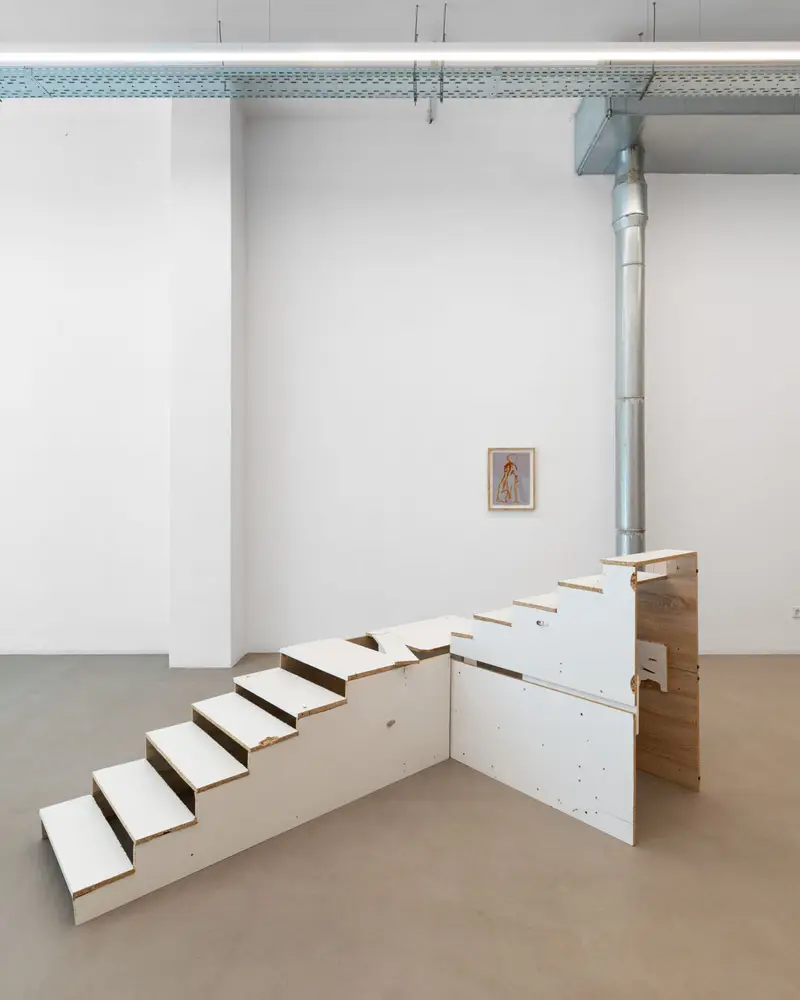
A record of an exhibition should preserve enough about where things were to let another person ask why they were there. The room and the work can each be described precisely while the relation between them remains hard to recover. Sometimes it is the apparently redundant view, taken a little to one side, that shows the interval a person had to cross to get from the staircase to the drawing. That interval belongs to the exhibition. It also belongs to the house and to the gallery’s temporary right to decide what somebody would encounter after crossing it.
Consider how much can change when an exhibition closes. The objects depart. The building can be photographed again from nearly the same place, and its name will continue to organise how the image circulates. The address can do for itself what a drawing often needs someone else to do repeatedly through loans, conversation and publication. Bringing works into a building with that kind of public memory might help them acquire a more durable place in conversation. It can also leave them dependent on a detail of the exhibition’s history that is easier to repeat than anything about the work. They were shown in a house by Le Corbusier. The sentence fits comfortably into an account of an artwork’s movements. Its usefulness lasts only as long as it opens onto a more particular description of what happened there.
There is also something unusual in letting art made under other domestic circumstances spend time inside a house built around one artist’s work. The original plan demonstrates how an artist’s need for time and light can shape a building. The exhibition makes that solution available for inspection from the standpoint of works and lives that it was never required to accommodate. Some of what the house provides still matters, including the chance to set aside a room and invite somebody into it. Other things are still beyond its reach. It cannot account for the conditions in which a much smaller work was made or redistribute the obligations that once determined when its maker had time to work. An exhibition can make those discrepancies available to a visitor if it gives the objects enough authority to disclose them.
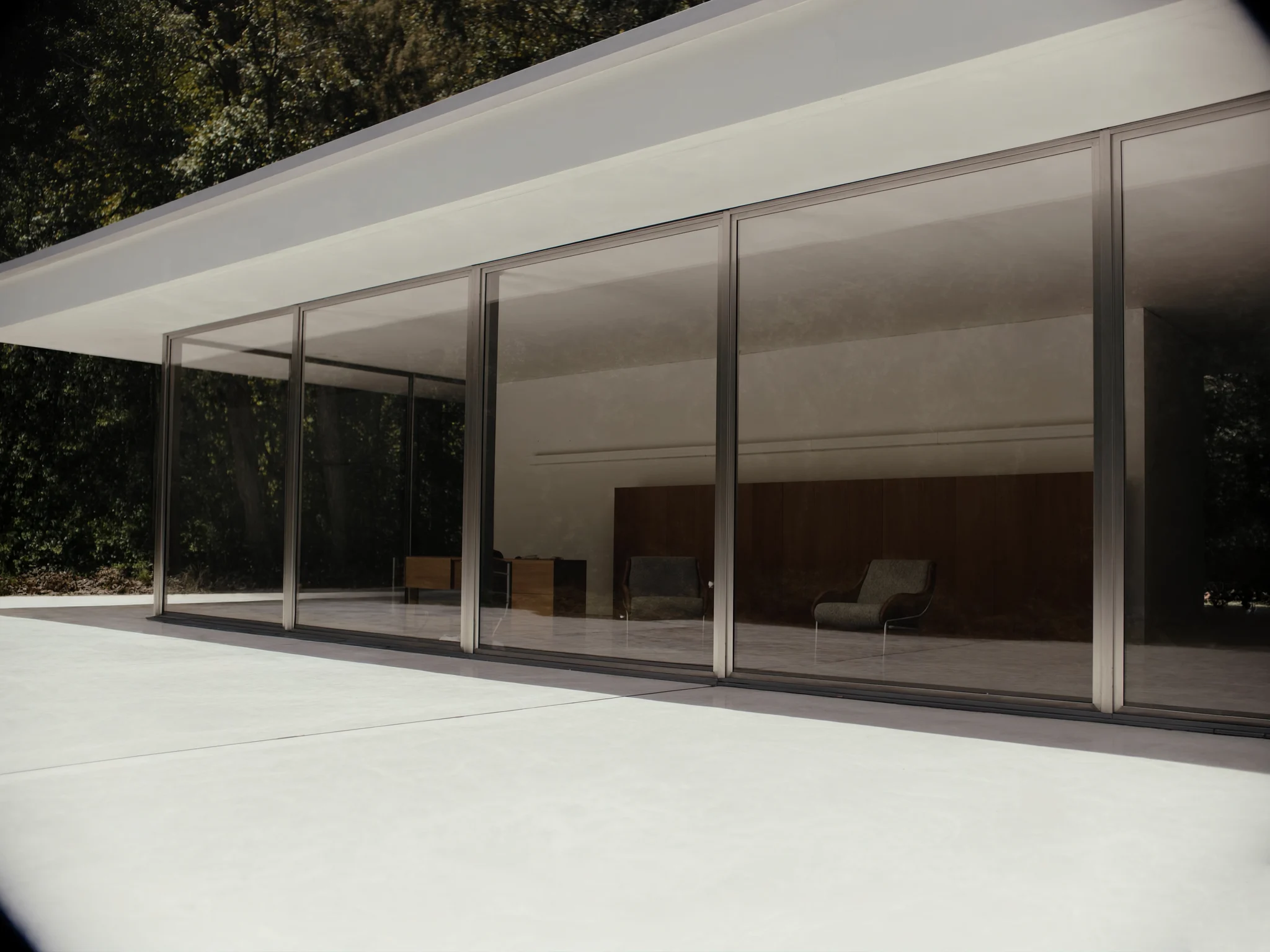
The glass pavilion on the cover offers a different view of a modern house. From outside, the furniture and the thickness of the terrace are clear enough. The trees visible in the glass are partly reflections and partly what can be seen through it. It would take a change of position to tell which are which. There is no equivalent movement available to the reader looking at the photograph. A visit to the Maison Ozenfant for Dépasser could offer that movement in a very modest form. Someone might come up the staircase intent on seeing the room they already knew from photographs and stop in front of a drawing about a man who came in too soon. From there the famous window would still be in the room. It would have to wait.