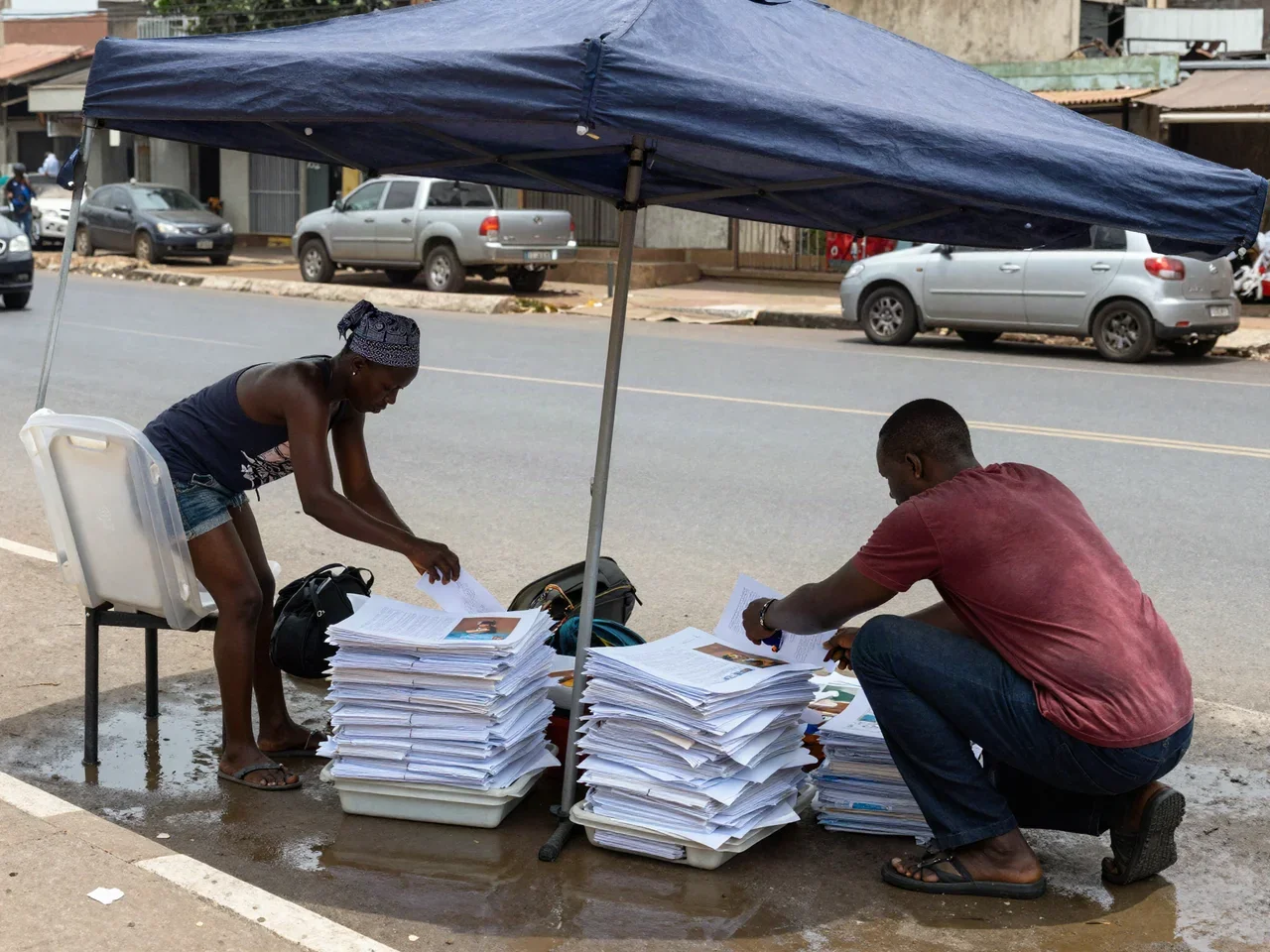
A railway running shed, a former racecourse and a tent on reclaimed ground give the Lagos Biennial three different ways of asking who a museum is for. In 2017, its first edition occupied the running shed of the Nigerian Railway Corporation. The building had been made to receive trains and the people who kept them running. It could now receive an exhibition, though none of the routines by which a museum makes a visit ordinary could simply be assumed there. In November 2026, the fifth edition, The Museum of Things Unseen, opened in a tent at Eko Atlantic. Its programme runs from 14 November to 6 December and introduces the Àkéte Collection, assembled from works associated with earlier editions and from new acquisitions, donations and loans. A temporary building has been put in charge of introducing something meant to outlast it.
Taking a place for the duration of an exhibition and taking custody of a work are two different operations. The first requires a negotiation about the use of space. The second commits someone to making decisions after everyone has left: where to place a work, what to record about it, when to lend it, who can study it, and what might count as an adequate version of it several years later. At the moment of display those decisions can look like administrative matters. Once a work is out of sight, they are often the means by which it retains a public life. The biennial's proposal interests us because it gives those decisions to an institution that learned to make exhibitions by entering places organized around other purposes.
There is a danger in telling that history as a sequence of spectacular buildings. A shed can become a persuasive image of informality simply because it lacks the surfaces of a conventional museum. What matters is which activities the art asks us to notice in the place. The 2024 edition, Refuge, occupied Tafawa Balewa Square. Its grounds had served as a racecourse in the colonial period and later as a venue for Nigeria's independence celebrations and for FESTAC ’77, the Second World Black and African Festival of Arts and Culture. Those histories do not produce a single account of who the square belongs to. A racecourse sorts spectators and participants in one way. An independence ceremony calls a national public into view. FESTAC brought artists and audiences together through affiliations that exceeded the boundaries of any one state. These uses make contradictory demands on the square even when they leave no sign a visitor can read off the ground.
Ibrahim Mahama's Yakachana was among the works shown there in 2024. In the biennial's installation photographs, its scale is disclosed by the amount of surrounding space it occupies. A photograph that isolates the piece can record its shape in some detail. A wider view tells us something else about the relation by which the installation became legible: where a person could stand, how much distance it asked of that person, what was still visible alongside it. The exhibition history of a large work will often depend on whether anyone kept both views. A museum receiving such a work has to decide which relations belong in the record, particularly when it cannot promise to reconstruct them.
To collect an exhibition is to make a decision about what its objects will be allowed to leave behind. An object may remain intact after its removal and still lose the conditions through which it acquired a public meaning. Those conditions can be recorded, or even partly reconstructed. Doing so asks the institution to treat access, scale and the uses of a site as knowledge that someone has to retain. The founding history of the Lagos Biennial gives that work a concrete starting point. Several of its previous venues had to be negotiated into public use in the first place.
A tent makes duration visible before one has seen any art. It also proposes a limit to what an exhibition can declare about its future. The fact that The Museum of Things Unseen gathers works under such a roof does not settle where those works will be studied five years later. The biennial describes a permanent pavilion as a project it is working toward. We can take the interval between the tent and that project seriously. The museum already exists as a promise someone may need to hold it to, while the form in which it will be answerable to a public is still being built.
A document kept by an institution can acquire a different audience from the one for which it was made. A letter arranging transport once addressed a person who needed to know when a work could leave. Years later it may tell a researcher more about the limits of an exhibition than the catalogue does. Who had a vehicle at their disposal? Which works could only be shown close to the place they had been made? Which invitations failed to lead to an object arriving on time? These questions change the status of paperwork. A successful exhibition can circulate internationally through its most persuasive photographs while the arrangements those photographs depended on remain in a room that very few people enter.
The Centre for Contemporary Art, Lagos, founded by Bisi Silva in 2007, makes a distinction on its website between the centre's institutional archive and Silva's curatorial archive. The first documents exhibitions, research and programmes, alongside the activity that sustained them. The second holds traces of a person thinking and working across institutional boundaries. We should expect some of the same occasions to appear in both. Their recurrence makes it possible to read how an exhibition moved from an inquiry with uncertain results to a programme an institution could announce and support. That movement is hard to recover from a list of titles. An archive can give it an order without erasing the hesitation and disagreement that preceded the event.
The centre's Archival Constellations residency gives the distinction practical consequences. Its first year, in 2026, puts researchers in contact with Silva's curatorial legacy and the administrative and exhibition records of CCA Lagos. An open call had to specify the terms under which a person could spend time with those materials. It made the prospect of access concrete enough for applicants to organize around it. Such arrangements rarely have the visual force of a newly installed work, but they affect which arguments about the work can be made later and by whom. A museum may own something for a long time without giving anyone comparable access to the circumstances in which it was made public.
This is one way to understand the inclusion of Lagos Studio Archives in the announced programme of The Museum of Things Unseen. A studio archive raises questions a museum catalogue can leave in suspense. An installation view has probably been selected from more than one photograph. A work that went into a collection may have had a series of experiments beside it for months. If those experiments survive, a visitor might be able to judge the determination involved in leaving an element out, or to find a connection that was never useful when arranging a solo exhibition. The studio introduces a different account of how an object came to look finished. Its records can enter an exhibition without surrendering their power to disturb that account.
Public custody includes the capacity to make a record available for use against the account that justified its preservation. An institution may assemble material to tell the history of its exhibitions. A researcher reading it might discover a history of people who made art possible without receiving credit for it. If the practical terms of access allow that reading to appear, the archive can contribute something its founding story had no place for. Its public role depends on what people are permitted to do with the material after the institution has called it important.
Silva's name appears in the biennial's opening programme through a reading. The gesture gives a particular voice a public hearing, at a particular time, before people who may be encountering the work of Lagos art institutions in an unusually concentrated form. The archive works at another pace. Someone who could not be there may want to spend a morning with one exchange and follow an uncertain reference into a subsequent visit. The two uses of the record can be sustained by different institutions. Their coexistence is one reason the question of what a Lagos museum might become has more than one answer within the city.
In Ibeju-Lekki, the Yemisi Shyllon Museum of Art began from an arrangement nearly inverse to the biennial's. Pan-Atlantic University had contemplated a teaching museum before the institution opened in 2019. A donation of about a thousand works from Yemisi Shyllon supplied the core of a collection whose public life could be planned around a building, university teaching and recurring visits. That account gives the museum a different obligation from the one the biennial inherited in the railway shed. A visitor may come back to a work after encountering it in a class. The museum has to be able to give that second visit a place among all its other work. Its address provides a kind of continuity for that learning, even though having an address does little to explain on its own who can make the trip or what they can do when they arrive.
The University museum and the Àkéte Collection allow us to consider what a founding gift actually establishes. A large donation gives an institution a body of material that can become available for study, as well as an initial distribution of attention among kinds of work. A collection formed partly from exhibitions inherits a different set of decisions. The works it receives have already passed through the priorities of particular curators, the dimensions of particular rooms and an organization's capacity to meet the costs of showing them. The list published for Àkéte places works from earlier editions alongside new loans and donations. That distinction is worth keeping visible as the collection develops. Someone making a claim about the artistic life of Lagos from these holdings should be able to tell which choices go back to a biennial and which came later through an agreement with an artist, collector or museum.
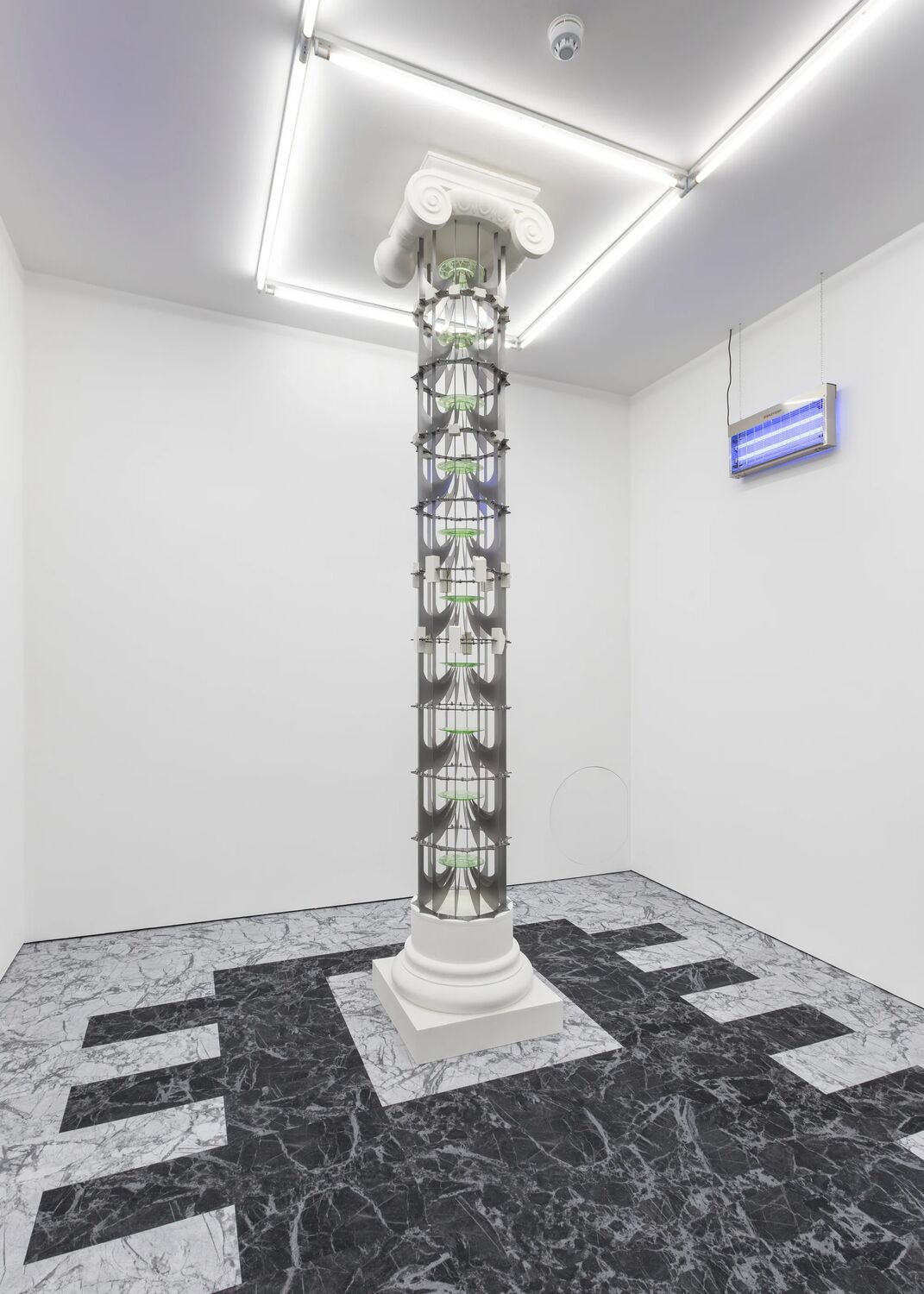
These institutions also raise different questions about artistic identity. A museum in Lagos can give the phrase Nigerian art a history sufficiently detailed to make its internal differences visible. A biennial can make room for a practice that takes shape across professional, diasporic and linguistic affiliations, alongside others whose artistic life is tightly bound to one part of the city. Consider Study for Reverberation, announced in the biennial's parallel programme as a collaboration between the Chicago-based Floating Museum and Adeju Thompson's Lagos Space Programme. The opening programme placed the work beside a conversation titled The Permeable Museum. A listener could approach the collaboration through several kinds of knowledge, including the terms Thompson has developed within fashion. Calling the result a work from Lagos would tell us one thing about the conditions in which it was made public. Deciding what of that collaboration to retain would require a much more exact account of who made it possible, how the parts relate, and how the work might be activated again.
A city can acquire the power to give shape to an international discussion long before it owns the buildings that make that authority visible. The power is exercised when a place determines what merits study, what kind of record an exhibition should leave, and where an artist's work can be revisited on terms the artist had some part in setting. There is a material side to that authority. A person must be paid to inventory the works. A loan needs a place to go when its term ends. Someone has to keep the archive usable between the occasions on which a biennial makes it news.
We can see the consequence in a simple question about Yakachana. If a visitor comes across a photograph of it several years from now, what will allow that person to tell why it mattered that the work was shown in Tafawa Balewa Square? There might be an inventory and a wider installation view, an account of what the square was used for, and knowledge held by a person who helped put the piece in place. The relations between those materials are difficult to preserve and can be sustained at different addresses. What the emerging institutions of Lagos ask us to see is how much a museum depends on that dispersed work. The people who arrive at Eko Atlantic this month can enter and leave through a tent door. What they will be able to return to is being decided in a different room and on a different timetable.